
How to Set Up Your Business for Successful SMS Campaigns
Key Facts
What makes an SMS campaign successful?
Success depends on the setup behind the message, not just the wording. A clean, permission-based contact list, audience segmentation, automation, and system integration all shape whether a campaign converts or gets ignored.
When should a business use SMS instead of email?
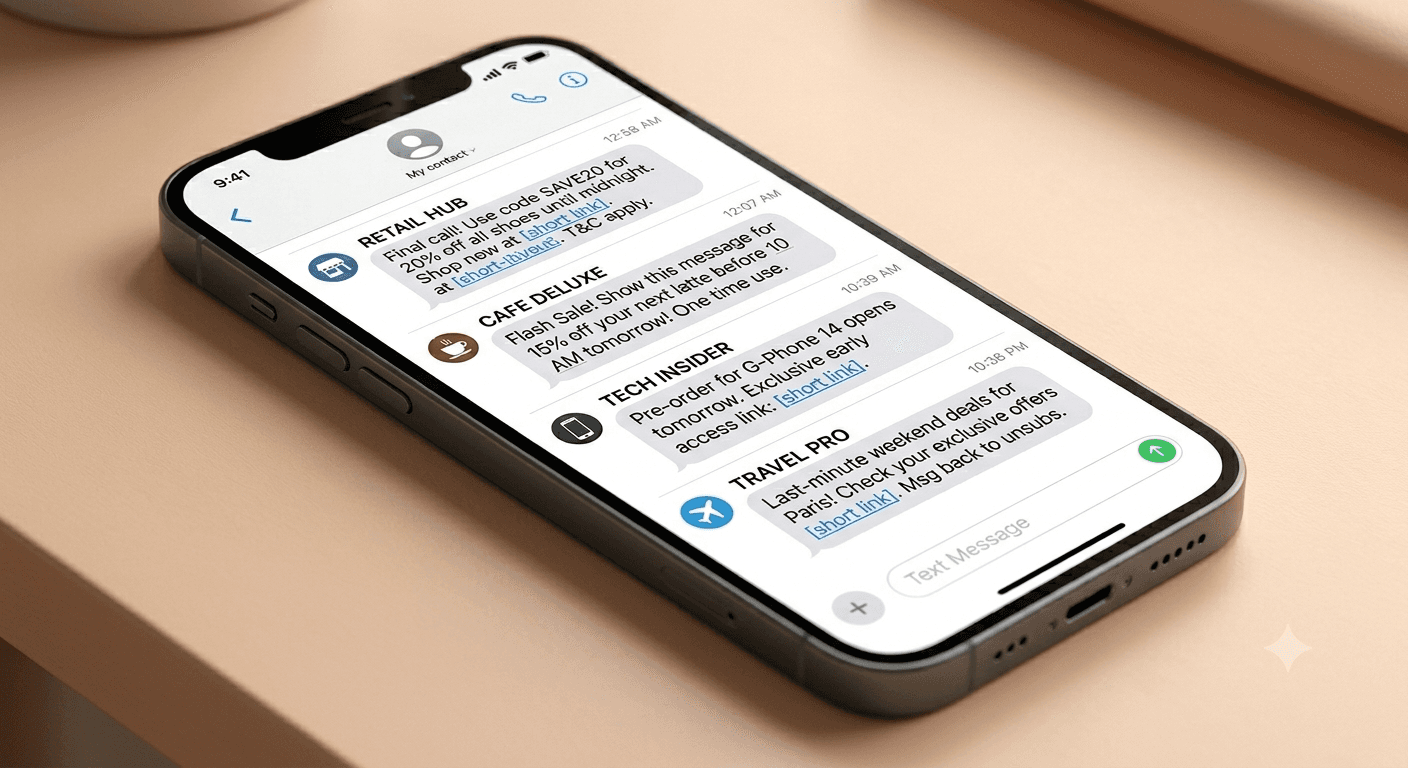
SMS works best for time-sensitive or high-intent messages, such as appointment reminders, delivery updates, limited-time offers, and one-time passwords. Longer content and newsletters are usually better suited to email.
Do businesses in Australia need to register their SMS Sender ID?
Yes, if sending branded SMS. From 1 July 2026, any unregistered branded Sender ID will display as "Unverified" instead of your business name, which the Australian Communications and Media Authority (ACMA) has warned can reduce customer trust and impact open rates. Confirm registration status with your SMS provider.
Quick Summary
Good data comes first
A smaller, permission-based list that is regularly cleaned of invalid numbers, duplicates, and opt-outs will always outperform a larger, uninterested one.
Relevance drives engagement
Segmenting your audience and reserving SMS for time-sensitive, high-intent moments keeps messages short, personal, and worth acting on.
Automation and integration compound results
Connecting your CRM, marketing platform, and SMS provider lets you trigger the right message automatically, then testing and measurement keep every campaign improving.
SMS success starts before you write the message
SMS remains one of the most effective channels available to businesses, with open rates that consistently outperform email. That makes it well suited to time-sensitive messages, promotions, appointment reminders, and customer updates. But sending a campaign is not simply a matter of writing a short, punchy message and hitting send.
The businesses that see the strongest results are the ones that put the right strategy, data, and technology in place before a single text goes out. Message quality matters, but it sits on top of a foundation of list hygiene, segmentation, automation, and integration. Get that foundation right, and even a simple SMS performs well. Skip it, and even a well-written message struggles to convert.
Build your list on clean, permission-based data
Every successful campaign starts with consent. Before sending any SMS, make sure recipients have opted in to receive messages from your business — this protects deliverability and keeps your program compliant.
A quality list will always outperform a large one filled with outdated or uninterested contacts, so it pays to regularly remove invalid numbers, duplicates, and customers who have opted out. Good data is the foundation everything else is built on.
Once your list is clean, treat it as a starting point rather than a single audience. Not every customer should receive the same message, so segment based on signals such as:
- Purchase history and vehicle or product owned
- Customer lifecycle stage and location
- Interests and previous engagement
Relevant, targeted messages generate better engagement and fewer opt-outs than a single broadcast sent to everyone on the list.
Match the channel and the message to the moment
SMS works best when the message is important or time-sensitive. That covers appointment reminders, delivery updates, limited-time offers, event reminders, one-time passwords, service notifications, and customer surveys. For longer content or newsletters, email is usually the better channel — SMS should complement your marketing strategy, not replace it.
Once you know a message belongs on SMS, write it for how people actually read texts. That means getting to the point quickly, including one clear call to action, avoiding unnecessary wording, and using shortened tracking links where appropriate. The easier a message is to understand at a glance, the more likely a customer is to act on it.
Personalise and automate the customer journey
Even small personalisation touches — a customer's first name, store or dealer name, appointment date, product purchased, or loyalty status — can meaningfully improve engagement. When your marketing platform is connected to your CRM, this kind of personalisation becomes far easier to automate at scale rather than managing it message by message.
Personalisation works best inside an automated journey rather than as a one-off broadcast. The highest-performing SMS programs trigger messages based on customer behaviour, such as:
- Welcome messages after sign-up
- Cart abandonment reminders and post-purchase follow-ups
- Service reminders, renewal notifications, and birthday offers
Automation ensures customers receive the right message at the right moment, without relying on someone to send it manually.
Connect your systems and protect sender trust
One of the biggest challenges businesses face is customer data living in disconnected systems. Connecting your CRM, website, forms, marketing platform, and SMS provider lets information flow automatically between them. That reduces manual work, improves personalisation, and ensures campaigns trigger in real time rather than on a delay.
System integration also supports something easy to overlook: sender credibility. If you're sending branded SMS in Australia, your Sender ID should be registered. From 1 July 2026, any unregistered branded Sender ID will display as "Unverified" instead of your business name — a change the Australian Communications and Media Authority (ACMA) has been urging small businesses and community groups to prepare for. This could reduce customer trust, impact open rates, and even cause important messages to be ignored. It's worth confirming with your SMS provider that everything is configured correctly before you scale up sending volume.
Test before you send, then measure and improve
Always test a campaign before it goes out to thousands of customers. A five-minute check of message formatting, personalisation fields, links, timing, opt-out instructions, and character count can prevent costly mistakes that are hard to walk back once a message is delivered.
Sending is not the finish line, either. Review campaign performance after every send, including:
- Delivery rate and click-through rate
- Conversions and revenue generated
- Opt-outs
Use those insights to continually refine future campaigns. The most successful SMS programs are not the ones with the biggest discounts — they're the ones that consistently deliver the right message to the right customer at the right time, and improve a little with every send.
References
Frequently asked questions
What is the first step in setting up an SMS campaign?
Start with a clean, permission-based contact list. Make sure every recipient has opted in, and regularly remove invalid numbers, duplicates, and opted-out customers before you segment or send anything.
How is SMS different from email for marketing purposes?
SMS is best for short, time-sensitive, high-intent messages like reminders, delivery updates, and limited-time offers. Email suits longer content and newsletters. The two channels work best when they complement each other rather than compete.
Why does audience segmentation matter for SMS?
Segmenting by factors like purchase history, lifecycle stage, location, or engagement ensures customers receive relevant messages. Relevant messages generate better engagement and fewer opt-outs than one message sent to an entire list.
How does system integration improve SMS campaigns?
Connecting your CRM, website, forms, marketing platform, and SMS provider lets customer data flow automatically between systems. That reduces manual work, improves personalisation, and lets campaigns trigger in real time based on customer behaviour.
What should businesses check before sending an SMS campaign?
Test message formatting, personalisation fields, links, timing, opt-out instructions, and character count before sending. After sending, track delivery rate, click-through rate, conversions, opt-outs, and revenue to improve future campaigns.
Next step
Turn SMS into a connected part of your customer journey
If your business already invests in CRM or marketing automation, SMS shouldn't run as a standalone channel. Connect your systems so campaigns trigger automatically, personalise themselves, and reach customers at the right moment.
Talk to the sysConnector team →About the author

Michelle Low
Founder, sysConnector
Michelle Low is the founder of Omnify X and creator of sysConnector. She enjoys turning messy marketing and CRM setups into simple, connected systems that actually work in real time. Michelle writes about marketing automation, system integrations, customer data, and practical ways to fix broken lead flows—based on what she's building and testing day to day.
More from the blog

How Marketing Agencies Can Capture, Route, and Manage Leads
Learn how marketing agencies can capture, route, and manage leads with clearer intake, faster handoffs, lead scoring, and tighter follow-up processes that reduce lead loss.
Read more →
What Is a Marketing Automation Platform and Why Data Quality Matters
Learn what a marketing automation platform does, why data quality is the make-or-break factor, and what it takes to make automation reliable across your tools.
Read more →
What Is a CRM Platform and How Does It Help a Business Grow?
Learn what a CRM platform is, how it works day-to-day, what core features to expect, and how to tell if your business needs one.
Read more →